
Drawing from extensive analysis of digital entertainment and its mechanics, I believe it is crucial to supply unambiguous, accurate educational resources about products like Shining Crown Slot, particularly for young groups https://shiningcrownslot.net/. This article is designed as a instructional resource, breaking down the ideas underlying such products excluding endorsement or incentive to engage. My objective is to enable UK youth with awareness, helping them grasp the basic mechanisms, the math of probability, and the structural principles used, which are frequently obscured by showy imagery and audio. This comprehension is a kind of digital fluency, arming young persons to make educated judgments and thoughtfully engage with the material they encounter, distinguishing the gap between casual activity and likely dangerous behavior.
Understanding the Fundamental Concept of a Slot Game
At its core, a slot game like Shining Crown is a software program built around a basic principle: random chance. Historically, slot machines were mechanical devices with spinning reels, but today they are sophisticated digital simulations. The game shows a grid, usually of symbols, and the outcome of each ‘spin’ is established by a Random Number Generator (RNG), a computer algorithm that assures each result is separate and unpredictable. The theme, such as a “crown” or royal motif, is merely a narrative skin placed over this mathematical engine. For educational purposes, it’s essential to strip away the thematic glitter and see the mechanism for what it is—a chance-based system where the house, or the game’s mathematical structure, always has a built-in statistical edge over an infinite number of plays. This edge, known as the house edge, is basic; it means the game is created for the operator to profit over time, making it a form of entertainment with a foreseeable financial cost, not a feasible income source.
To make this concrete, imagine a basic, hypothetical slot with three reels and ten symbols per reel. The total number of possible combinations is 10 x 10 x 10 = 1000. If only one combination pays a jackpot of 800 coins, the probability of hitting it on any spin is 1 in 1000. If a spin costs 1 coin, the game would in theory return 800 coins for every 1000 wagered, an 80% return. Real games are far more complex, with multiple paylines and symbol weights, but the principle holds: every payout is calibrated within a larger mathematical model designed for a particular long-term return that is always less than 100% of money wagered. This is the fixed core of the slot machine concept.
The Mathematics of Probability and Return to Player (RTP)
This is perhaps the most important educational section. Every regulated slot has a published Return to Player (RTP) percentage, for example 96% or 95%. This is a statistical statistic calculated over millions of spins, implying that for every £100 wagered, £96 could be returned as winnings over an remarkably long period. It is not a guarantee for any particular session. I use this to demonstrate the law of large numbers versus individual experience. A player might win big in ten spins or lose everything; the RTP solely manifests in the aggregate. This difference between long-term mathematical expectation and short-term emotional experience is a fundamental concept. Examining RTP and probability models enables youth build numerical literacy and a healthy skepticism towards claims of “beating the odds.”
To expand this, we need to discuss volatility (or variance). A game with 96% RTP may behave wildly differently. A low-volatility slot returns frequent, small wins, closely tracking the RTP over shorter sessions, promoting longer playtime. A high-volatility slot similar to many themed “jackpot” games has infrequent but larger wins, creating huge short-term swings. You could lose 200 consecutive spins before a win that recovers most losses. The RTP is the same, but the player experience is radically different. This is crucial for understanding emotional risk: a high-volatility game can create intense frustration followed by euphoric relief, a powerful psychological cocktail. The mathematics also demonstrates that chasing losses is a logical fallacy; each spin is independent, so the “missing” £4 of the RTP is by no means a debt to be reclaimed but a spread cost absorbed across all players over time.
Sound Engineering and Visual Perception in Slots
The learning value here lies in media literacy. The visuals and audio in games like Shining Crown are not arbitrary; they are skillfully constructed psychological tools. Victory tunes for wins, even small ones, use reward conditioning. Tension-building sounds during a spin increase anticipation. Flashing lights and moving visuals near-misses (where symbols almost line up) fool the mind into seeing a ‘close call,’ stimulating continued play. Visually, the royal theme uses links of wealth, luxury, and success. By breaking down these audiovisual elements, we educate young people about persuasive design and how sensory feedback can manipulate emotional response and decision-making, a skill applicable to analyzing advertising, social media, and other digital interfaces.
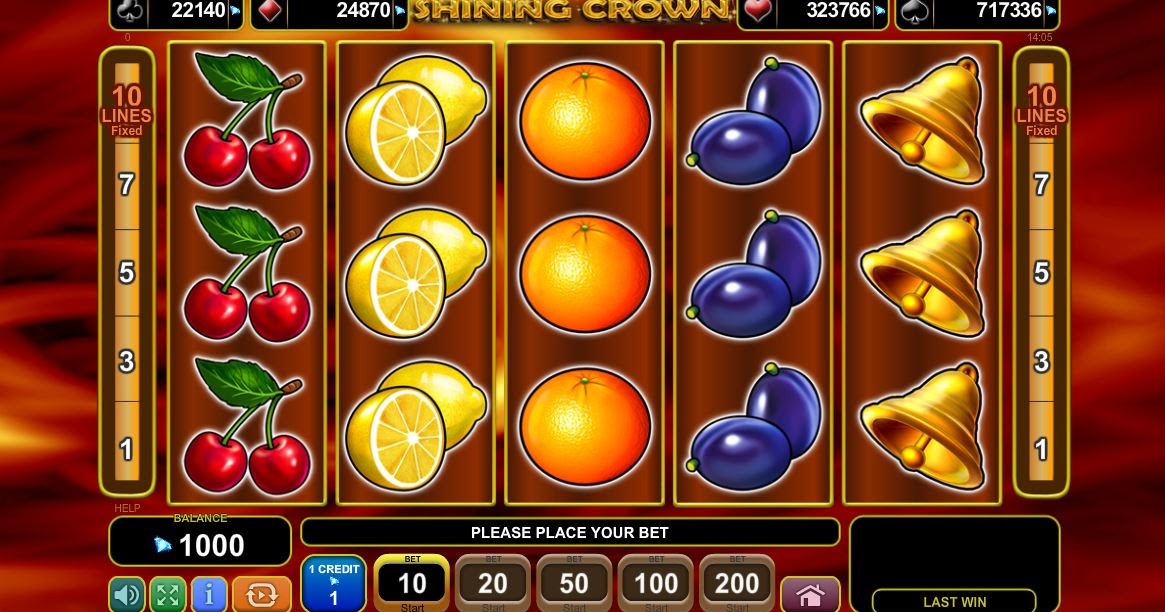
Examine the specific techniques: “Losses disguised as wins” (LDWs) happen when you win back less than your original bet, but the game still produces celebratory sounds and animations. This generates a false positive. The use of “spin to win” mechanics, where reels stagger their stops to increase drama, is a direct adaptation from film editing techniques. The color palette—golds, deep purples, bright gems—is linked to opulence. Even the game’s title, “Shining Crown,” uses aspirational symbolism. These elements work on a subconscious level to construct a world where the player feels temporarily empowered and wealthy, a stark contrast to the underlying mathematical reality. Analyzing this sensory layer-by-layer shows how modern digital slots are as much a product of psychological and artistic design as they are of mathematical programming.
Exploring Bonus Features and Their Functionality
Bonus features including free spins, pick-me games, or expanding wilds are engagement hooks crafted to add excitement. In an educational context, we must analyze their function, not just their fun. These features disrupt the base game with a mini-game or altered rules, often presenting a higher potential win. However, they are not gifts; they are triggered with the same RNG logic, following the game’s overall return percentage. For example, a “Free Spins Round” might be activated by landing three scatter symbols. This demonstrates conditional probability—the chance of the bonus is the chance of landing those specific symbols. Understanding that these features are pre-programmed events within the mathematical model is vital to seeing the entire game as a unified system of chance, not a series of magical bonuses.
Take the common “pick bonus” where you pick from hidden objects to reveal instant prizes. This seems like a game of skill, but the total prize pool for that round is determined the moment the bonus is triggered. Your choices merely display a pre-assigned outcome. Similarly, “free spins with multipliers” might promise bigger wins, but the average return from that round is still factored into the game’s overall RTP. A game with a 96% RTP doesn’t have a base game of 94% and a bonus of 110%; rather, the exhilarating bonus round average is mathematically blended with the lower-paying base game to hit that 96% target. These features are brilliant at creating memorable peak experiences—what psychologists call “peak-end rule”—making you remember the thrilling bonus rather than the many uneventful spins, a powerful cognitive bias in game design.
The Function of Random Number Generators (RNGs)
The number generator is the core of every online slot machine, including titles like Shining Crown. I aim to clarify this: an RNG is not a physical wheel or dice; it’s a software algorithm endlessly creating numerous number streams per second, even when no one is playing. When you hit ‘spin’, the game just captures the number created at that instant and converts it via a fixed paytable into a particular arrangement of symbols on the screen. This means each spin is a discrete, isolated event. There is no recollection, no ‘due’ win, and no pattern. Educating youth about RNGs debunks popular misconceptions about ‘hot’ or ‘cold’ machines and emphasizes that outcomes are purely algorithmic luck, an essential insight in odds and digital perception versus perception.
It’s likewise essential to understand that these generators are verified by third-party testing agencies to guarantee impartiality and real chance. However, this certification guarantees the lack of manipulation, not beneficial chances for the player. The RNG feeds into an electronic reel layout, where each symbol occupies a specific count of positions. A high-value symbol like a crown may occupy only 2 stops on a digital reel with 200 stops, while a minor cherry graphic might occupy 30. The RNG picks a slot for each reel, and the symbol occupying that stop is displayed. This mapping from a random number to a biased icon is how the slot’s intended variance and RTP are achieved, proving the spin’s visual outcome is preordained by intricate, hidden calculations as soon as you hit spin.
Responsible Gambling Principles for Young Adults
As young adults approach the age of majority, learning must move to tenets of responsibility. This doesn’t concern how to play, but how to position any possible future engagement with utmost prudence. Key principles include understanding that gambling is not a way to make money, but a kind of recreation with a cost. I advocate for establishing clear boundaries on time and spending used before any activity commences and viewing losses as the expense of that amusement, not a obligation to be recovered. Crucially, it entails spotting personal red flags, such as obsessing about gambling continuously, chasing deficits, or getting cash. This learning fosters a outlook of conscious participation and introspection, vital for managing many mature settings.
Practical implementation of these tenets requires tangible habits. To begin, the funds spent should be disposable recreation resources, never cash for necessities like housing, bills, or travel. A prior approach is essential: determine “I will spend £20 for one period of amusement this evening,” and quit when any limit is met, no matter of wins or losses. It’s also wise to mix wagering pastimes with other communal hobbies to prevent it from becoming a primary pastime. Understanding the “gambler’s fallacy” and the unpredictability of random results helps mentally separate from loss streaks. In conclusion, regular self-assessments are essential: Are you wagering for fun, or to escape anxiety? Are you hiding your behavior? Responding yes to such inquiries is a clear signal to take a break and seek unbiased information or support.
Age Limits in Law and Their Rationale
In the UK, it is against the law for anyone under the age of 18 to gamble, and this includes playing online slots for real money. This legal framework is not a capricious law but a protective measure based on growth psychology and risk assessment. The adolescent brain, particularly the prefrontal cortex responsible for impulse control and future-oriented choices, is still developing. This makes young people more vulnerable to the dopamine-driven feedback loops that games of chance can create. The law recognizes this increased susceptibility. My role as an educator is to explain the science behind the law, framing it not as a restriction on freedom but as a protection for a maturing psyche, similar to age limits on alcohol or driving.
The neuroscience is clear: the brain’s reward system develops earlier than its control systems. The sensation of a win, even a small one, activates a release of dopamine, solidifying the behavior. In a developing brain, this reinforcement can be stronger and lead to more entrenched patterns. Furthermore, young people are naturally higher in sensation-seeking and may downplay individual danger. The age limit is a social boundary drawn to allow for more complete psychological development before exposure to an activity with known addictive qualities. It’s also a commercial regulation; operators must perform rigorous age verification checks, and failure to do so results in heavy penalties from the Gambling Commission, emphasizing the seriousness with which this protective boundary is treated.
Understanding Game Symbols and Paytables
Symbols and paytables are the lexicon of the game. In a theme like Shining Crown, symbols might include crowns, jewels, crests, and standard card suits. Each symbol has a different assigned value. The paytable is the game’s rulebook—it explicitly lists what each symbol combination pays. A key educational exercise is to analyze a sample paytable to understand volatility. For instance, frequent small wins from low-value symbols versus rare, large wins from a special ‘crown’ symbol. This demonstrates about risk distribution. I often explain that the most common, lower-paying symbols are designed to generate a sense of frequent activity, while the high-value ‘jackpot’ symbols are statistically rare, a direct lesson in how reward frequency is inversely related to reward size in chance-based systems.
Let’s create a simplified analytical example based on common slot structures. A paytable isn’t just a list; it’s a data set indicating the game’s intent. Consider these typical symbol categories:
- Low-Pay Symbols (10, J, Q, K, A): These appear most frequently, offering tiny wins like 2x or 5x your line bet for a combination of five. Their function is to supply constant, small feedback to keep the player engaged.
- Mid-Pay Theme Symbols (Jewel, Sceptre, Castle): Less common, these offer moderate payouts (e.g., 10x to 25x). They create the impression of meaningful progress and interrupt the monotony of low pays.
- High-Pay Premium Symbols (Crown, Royal Character): These are the rarest on the reels. Landing five might pay 100x or 500x your bet. Their scarcity is the engine of the game’s volatility.
- Special Function Symbols (Wild, Scatter, Bonus): These don’t usually award large sums directly but activate mechanics (like wild substitutions or bonus rounds) that lead to higher win potential, acting as gateways to more engaging, but still randomly determined, events.
How to Locate Help and Additional Objective Resources
Knowledge also means knowing where to look for unbiased help or information. I always provide a list of reputable, non-commercial organizations committed to education and support. These resources are vital for anyone, particularly young people, who might have concerns for others. They offer tools, advice, and a outlook completely free from industry influence. Interacting with these resources should be seen as a indication of strength and proactive self-management, not a last resort. They provide the factual grounding and supportive frameworks that offset the influential design of gambling products, equipping individuals with context and community.
Aside from the frontline charities, I urge curious minds to examine the raw data and academic perspectives. The UK Gambling Commission’s public data sets show participation trends and problem gambling prevalence rates, providing a sobering macro-view. Academic journals release studies on a range of topics from the exact algorithmic structures of games to the neuroimaging of decision-making in problem gamblers. For a far more accessible deep dive, the websites of these organizations often feature blogs, podcasts, and video explainers that transform complex research into understandable insights. This ecosystem of objective resources exists to clarify the industry and support informed citizenship, making sure that any knowledge of games like Shining Crown is based in evidence, not just experience or marketing.
